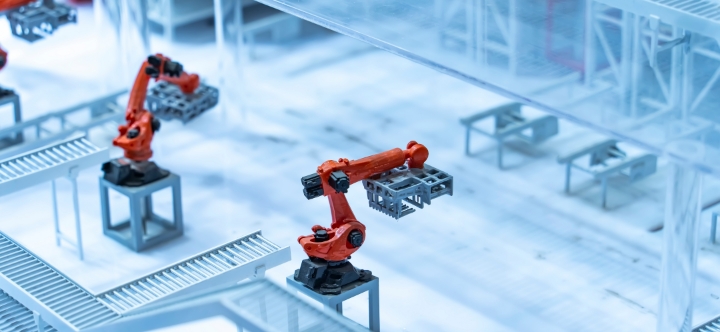


Robot OLP

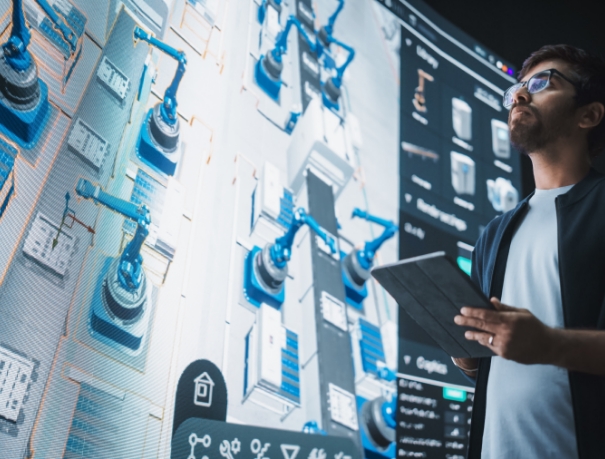
We deliver innovation in robot offline programming (OLP) using NVIDIA Omniverse-based Isaac Sim.
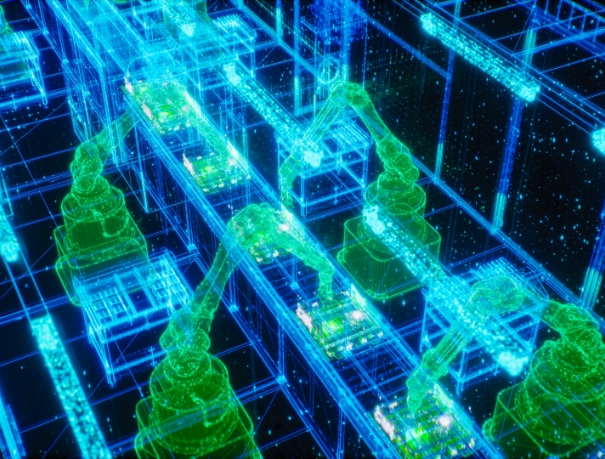
Build digital twins of real environments and simulate collision-free optimal paths to minimize on-site downtime and maximize productivity.

PRINCIPLES

Robot Program Optimization Through Sim2Real

The core of Isaac Sim-based OLP is the ability to successfully transfer what is learned in simulation to real environments (Sim2Real).
Unlike conventional simulators, this goes beyond simply reproducing robot movements.
  1. GPU-Based High-Precision Physics Engine

    Calculates detailed physical interactions such as robot contact, joint torque, and friction with near-real accuracy, ensuring that programs validated in simulation operate on real robots without collision or singularity issues.
  2. Domain Randomization

    Randomly varies environmental parameters such as lighting conditions, object textures, and sensor noise during training. Through this process, robots learn 'robust' behaviors that can adapt to various conditions, forming the foundation for generating OLP programs that reliably respond to unexpected variables in real-world environments.
  3. Omniverse-Based Vision Data

    Using cutting-edge ray tracing technology to generate visual data nearly identical in quality to real camera sensors, enabling high-accuracy OLP path generation for vision-based robot tasks (e.g., object recognition and handling).

FEATURES

Key Features of Simvis OLP Solution

  1. GPU-Accelerated Physics

    PhysX 5-based GPU-accelerated simulation reflects high-precision physics in real-time.

  2. Domain Randomization (DR)

    Randomizes lighting, textures, and object positions to minimize the Sim2Real gap and ensure robustness.

  3. Universal Scene Description (USD)

    Provides high compatibility with various 3D assets and robot models through an open standard format.

  4. ROS/ROS 2 Support

    Ensures ease of real robot deployment and control through seamless integration with Robot Operating System.

  5. Synthetic Data Generation

    Automatically generates large-scale, high-quality simulation imagery and physics data required for AI training.

PROS & CONS

Advantages & Considerations

Accessibility
Advantages
Time/Cost Savings: Complete program validation offline without real robot on-site setup
Considerations
USD Entry Barrier: Based on USD format, initial learning costs for non-standard 3D model asset compatibility and editing
Accuracy
Advantages
Improved program accuracy through realistic virtual environments utilizing ray tracing
Considerations
Hardware Requirements: High-performance NVIDIA GPU hardware environment essential for GPU acceleration
AI Integration
Advantages
Optimal synthetic data environment for reinforcement learning and vision model training

APPLICATIONS

Key Application Areas

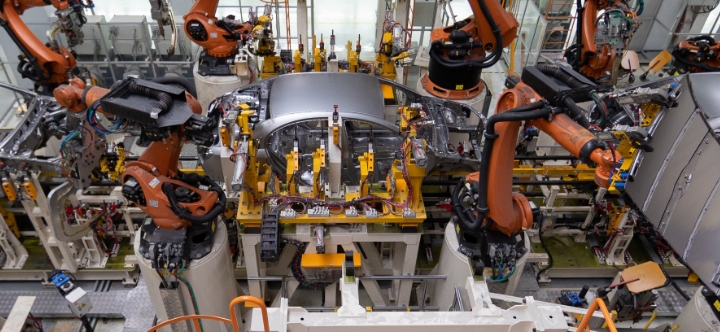
  1. Automotive Welding & Painting

    Quickly and accurately generate and optimize welding and painting paths for complex curved structures offline, reducing production changeover time.

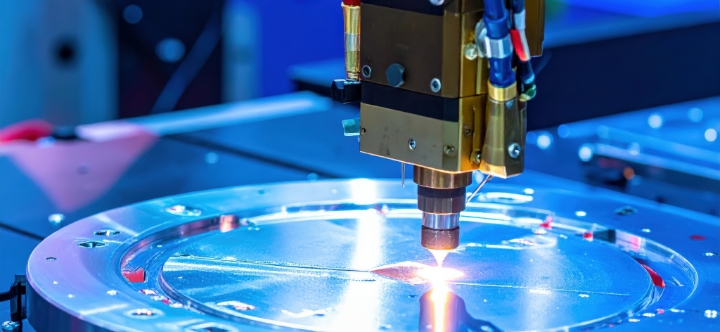
  2. High-Precision Machining & Polishing

    Simulate machining paths considering robot arm singularity avoidance and collision prevention to improve CNC machining robot accuracy and operational safety.

  3. Smart Factory Logistics Automation

    Design optimal logistics flow and train autonomous navigation AI models through path planning and repositioning simulation of logistics robots (AMR, AGV).

  4. HRI (Human-Robot Interaction)

    Build efficient and safe collaboration environments with human workers through safety zone and work range simulation of collaborative robots (Cobots).